

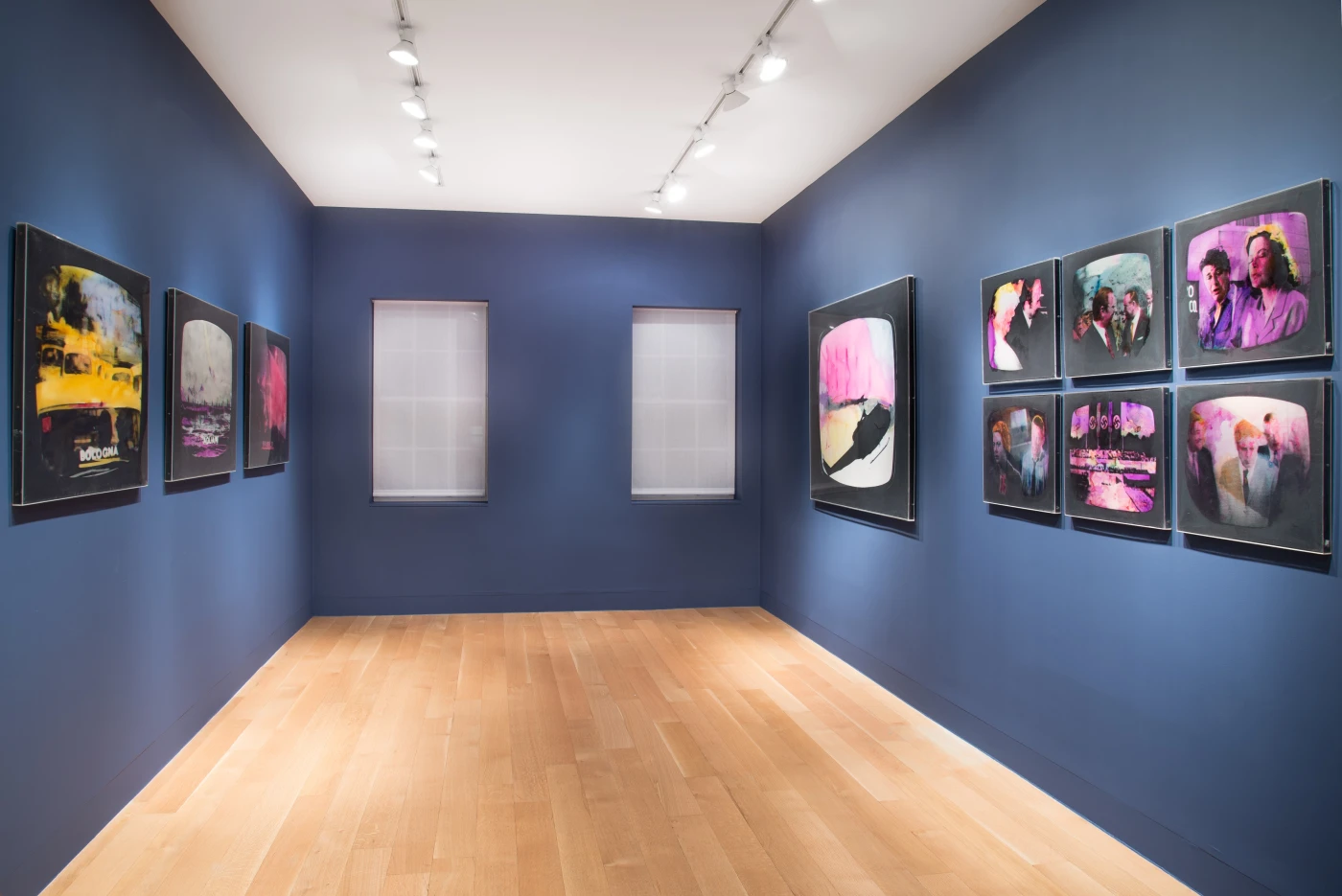
The Italian pop artist Mario Schifano captured the energetic life in his paintings, and he is considered the country’s greatest artist. As his paintings reflected modern life, they pulsed with its pulse, capturing television flicker, urban landscapes, and mass media bombardment. Art critics and collectors recognize his genius, with quotazioni reflecting his important market presence alongside international contemporaries. Schifano transformed everyday imagery into artistic statements decades after its creation.
Television as artistic inspiration
Schifano was obsessed with television long before most artists recognized its cultural significance. He’d paint directly while watching TV, letting the screen’s glow and constant image changes influence his brushwork. The artist captured that hypnotic quality of television viewing – how images blend, how colours shift and distort, how our attention fragments across channels. His paintings from the 1960s show blurred figures that look exactly like people caught between TV stations, faces dissolving into static and visual noise that perfectly captured how the media was reshaping human perception.
Urban landscape transformation
The artist walked through Rome’s changing streets and absorbed everything construction sites, billboards, traffic, neon signs, and architectural destruction. His canvases became urban diaries where ancient Roman ruins appeared alongside modern advertising, where traditional Italian life collided with American pop culture invasion. Schifano painted construction barriers not as obstacles but as symbols of perpetual change, showing how cities constantly reinvent themselves while destroying their own histories in the process.
Mass media integration methods
Schifano’s approach to incorporating mass media elements was revolutionary for its time:
- Magazine cutouts collaged directly onto painted surfaces, creating texture and narrative layers
- Newspaper headlines integrated as compositional elements rather than simple decoration
- Advertisement imagery repurposed to comment on consumerism without heavy-handed criticism
- Television screenshots translated into painterly interpretations that maintained broadcast energy
- Comic book aesthetics merged with fine art techniques to bridge high and low culture
- Photography references filtered through personal artistic vision rather than direct copying
Pop culture documentation
The artist served as an unofficial historian of Italy’s cultural transformation during the years of economic miracles. His paintings captured the exact moment when traditional Italian society met American pop culture head-on. Coca-Cola signs appeared in his work as corporate endorsements but as symbols of a cultural shift. He painted movie stars, consumer products, and pop music imagery with the same seriousness reserved for religious subjects, as pop culture had become the new shared mythology of modern society.
Colour and movement techniques
Schifano developed unique methods for conveying modern life’s frenetic pace:
- Overlapping transparent layers that created depth while maintaining surface energy
- Drip techniques borrowed from abstract expressionism but applied to representational subjects
- Spray paint applications that mimicked urban graffiti and industrial processes
- Metallic paints that reflected light similarly to television screens and car chrome
- Quick gestural marks that captured movement and speed of contemporary existence
- Colour combinations inspired by artificial lighting and natural landscapes
His colour choices reflected the artificial environments where most people now spent their time: fluorescent office lighting, neon street signs. These colours are but civilization’s palette, and Schifano, with modern life, required a modern visual language to match its intensity and artificiality. Schifano succeeded where many contemporary artists failed because he embraced rather than criticized the modern world’s visual chaos. Through his paintings, he preserves the exact feeling of living through rapid social change during Italy’s transition into a modern consumer society.