

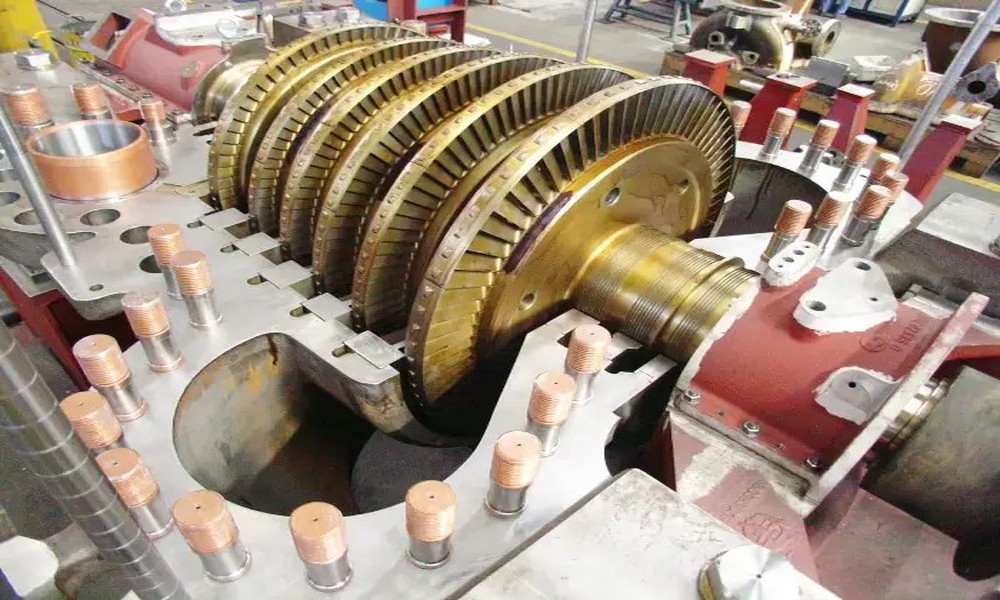
One of the most important parts of energy production is the steam turbine. In addition to guaranteeing continuous operations.
Their effectiveness and dependability are critical for increasing productivity and lowering operating expenses. Proper Turbine Inspection and maintenance can have a significant impact on these advantages.
The Value of Maintaining Steam Turbines
Maintaining the effectiveness requires routine maintenance. Machines can have several problems that drastically lower their efficiency if maintenance is neglected. These include component misalignment, wear, and strain on moving components. Not to forget the accumulation on turbine blades. All of which can result in lower production and higher fuel consumption.
To adjust to shifting operational conditions, maintenance is essential. For example, as machineries age or the operating environment changes. They may require modifications or recalibrations. These modifications can be made during routine maintenance. Thus, guaranteeing that the machine will continue to function effectively in novel circumstances.
Frequent inspections, cleaning, and prompt replacement of worn parts are all components of effective maintenance. By taking these steps, the unit’s efficiency is maintained at its highest level. While operating smoothly and with little resistance or friction.
Such routines also make it possible to identify possible problems early. This makes it probable to fix issues before they become serious ones. By being proactive, the machine is kept operating at maximum efficiency. Also, the expensive downtime associated with significant repairs or breakdowns is avoided.
How to Increase the Efficiency
- Frequent Inspections: Examine the parts closely to look for any indications of damage, wear, or misalignment. This aids in the early identification of problems. Check out https://basicmoneytalk.com/understanding-steam-turbines-and-inspection-of-components/ to read further.
- Cleaning: To eliminate deposits and stop accumulation, which can reduce efficiency and raise fuel consumption. You must clean blades and other parts regularly.
- Replacement of Parts: To avoid faults and preserve the unit’s smooth performance. Replace parts that exhibit wear as soon as possible. Bearings, rings, and blades are typical examples.
- Lubrication: To lower friction, avoid overheating, and preserve effective functioning. Make sure moving parts are properly lubricated.
- Performance Monitoring: Keep an eye on the machine’s performance at all times. This is to spot any variations from typical operation and take quick corrective action.
- Calibration and Adjustments: To guarantee maximum efficiency and respond to shifting operating conditions. Calibrate and tune the unit regularly.
Inspection of Components
Usually, this entails examining the following elements:
- Rotors
- Stationary Blading
- Shells and Casings
- The bearings
- Bolting
- Components of valves
- High-Energy Piping
During a significant or moderate outage, certain components are inspected. While the unit is partly disassembled during a minor outage. And when the inspection is limited to the portions that are reachable or disassembled.
Or during a big disruption, most of the components will be inspected. Some outages just concentrate on the valve’s component parts. And the extent of work frequently includes inspecting the repairs that have been made.
The rotor is arguably the most important component of the steam turbine. Using one of its in-house 10,000-AMP mag machines. Technicians inspect the rotor periphery for magnetic particles.
To locate hints in the axial direction, a headshot is conducted while a rotating magnetic field is present. To create a longitudinal field and locate signals in the radial direction. The bucking field or coil approach is employed.
Specialized Inspection Methods
- Boresonics Inspection: This method looks at how a rotor is forged within the bore cavity. Straight, stepped, and flask bore configurations can all be inspected. The procedure includes power honing the bore surface. Then, removing and installing the bore plug or plugs.
- Ultrasonic Testing: This is also known as peripheral ultrasonic testing (UT). It looks for signs in a rotor’s forging from its periphery.
- Wheelsonics Dovetail Testing: To stop bucket liberation, this procedure examines for signs of stress corrosion cracking, or SCC, in the wheel-blade connection area.
- Disk bore & Keyway Examination: For shrunk-on-disk style rotors, this examination checks for signs of cracking. The ones due to stress corrosion in the disk wheel bore area.
- Trepan Inspection: Certain configurations are subject to this check. Examining the nozzle chamber pipes is part of the scope of work.
A borescope will be used to inspect the Trepan regions for moist black powder magnetic particles. The bell sealing welds will undergo an ultrasonic examination.
- Hardness Testing: This method uses a test to determine a material’s hardness so that it can be used in the evaluation. Go to this website for added info.
- Replica Testing: It is performed to analyze a component’s remaining service life and detect creep deterioration.
Conclusion
One important factor is maintenance. This has a direct impact on steam turbines’ effectiveness, lifespan, and general performance.
To guarantee their best performance, it is essential to comprehend the significance of routine care. You can spot the warning indications of required repairs. And you can attend to particular needs depending on the type of machine.
Frequent checking guarantees that these machineries run at maximum efficiency and prolongs their lifespan. This makes electricity generation more reliable and cost-effective.
Operators can greatly improve the efficiency and lifespan of their units. This is achieved by following these procedures.