

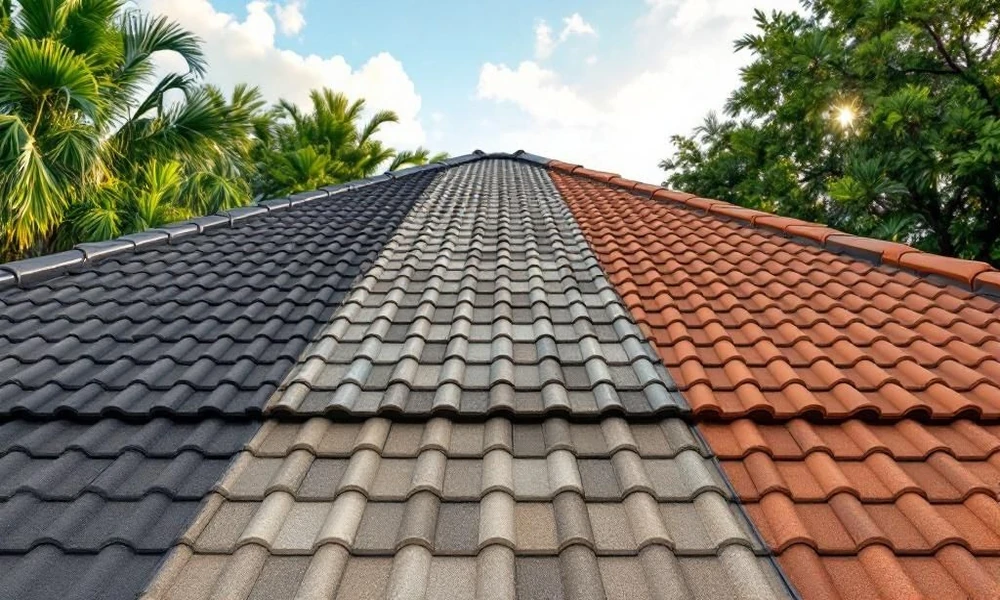
The dumpster shows up at 7 a.m. By lunch, the old shingles are gone and the whole neighborhood can see bare plywood. Homeowners tend to focus on the color of the new shingles. What really determines whether a roof survives Florida weather is the work done in the hours after the tear-off, before anything decorative goes on. Anyone planning a roof replacement in Orlando will deal with these hidden layers, and they’re the part a long-running Central Florida crew like the veteran-owned team Gene Creel founded in 2002 spends the most time on, whether the finished roof is shingle, tile, metal, or a flat membrane.
Every part of a roof that lasts thirty years is built in sequence. Here’s that sequence from the bottom up.
Bare Wood Tells the Truth
After the old roof comes off, the deck is fully exposed for the first time in decades. It’s usually plywood or OSB in 4×8 sheets, and it’s where hidden problems finally show. Wood around valleys, chimneys, plumbing vents, and along the eaves is where a slow leak has often been soaking in for years without showing up on the ceiling.
Most Florida contracts price decking repair per sheet, apart from the main job, because no one can know how much is rotten until it’s uncovered. It helps to know ahead of time what crews look for.
- Soft spots that give under a boot, especially near the lower edge of each slope
- Dark staining or delamination, where the layers of plywood have started separating
- Sheets that sag between rafters, often from an earlier roof that was too heavy or from long-term moisture
- Old patches that used thinner or mismatched material
If the estimate has a per-sheet price, ask how many sheets are included and get a photo of every sheet replaced. That keeps the final bill based on evidence and not just a number on an invoice.
Nails Nobody Will Ever See
Once the deck is sound, it has to be held down. In a hurricane, the roof deck is under suction, not just pushed by wind, and older homes were often nailed with smooth shank nails spaced far apart. Florida’s building code can require that attachment to be upgraded during a reroof. Many reputable crews re-nail with ring shank nails as standard practice even when it’s not strictly required, because ring shanks resist pulling out much better.
This step also counts for insurance. A wind mitigation inspection after the roof is done records how the deck is fastened, and stronger attachment can lower your windstorm premium for years.
The Layer That Actually Keeps Water Out
Many homeowners don’t realize that shingles and tiles mainly shed water and protect against sun and wind. The underlayment underneath is the real waterproof barrier. If wind tears off part of the outer covering during a storm, the underlayment is what keeps rain out of the attic.
Older Orlando roofs usually have asphalt-saturated felt. Today’s roofs more often use synthetic underlayment, sometimes with a self-adhered membrane applied directly to the deck. That self-adhered layer acts as secondary water resistance and also improves a wind mitigation report. Tile roofs need especially good underlayment because the tile can easily outlast what’s beneath it. When a tile roof leaks after twenty years, the tile is rarely the cause.
Metal at the Edges
The edges of a roof are where wind gets a grip and water gets in. Drip edge along the eaves and rakes is required on shingle roofs. It carries water off the fascia and gives the roof edge a firm, straight line. Flashing at walls, chimneys, and skylights should be replaced with the roof. Reusing corroded old flashing to save a few hundred dollars is a common shortcut that causes leaks later.
Two-story homes in Orlando often have spots where a lower roof meets a stucco wall. Proper step and counter flashing there matters more than almost anything else on the roof, and it’s worth asking your contractor directly how they’ll handle it.
Air Moving Through the Attic
An Orlando attic in August can get far hotter than the outdoor air. That heat bakes shingles from below and pushes the AC system harder. Good ventilation means balanced intake at the soffits and exhaust near the ridge. A common rule is about one square foot of vent area for every 300 square feet of attic floor, split between the two. A reroof is the cheapest time to fix ventilation, because a ridge vent can be cut in while the roof is already open.
Finally, the Part Everyone Sees
The outer layer still matters, just in more specific ways than color. Asphalt shingles sold for Florida should have a high wind rating and state product approval. Concrete and clay tile is attached with foam adhesive or mechanical fasteners, and the method affects wind performance. Standing seam metal hides its fasteners under raised seams, so it needs less long-term attention than exposed fastener panels. Low-slope sections over porches and additions need a membrane such as TPO or modified bitumen, not shingles laid on a slope too flat for them.
The Paper Layer
The last layer is paperwork. A reroof needs a permit, and in Florida any improvement over $2,500 generally requires a recorded Notice of Commencement. This protects you if a supplier or subcontractor goes unpaid. Central Florida jurisdictions usually require an inspection partway through, often after the deck is nailed or the underlayment is installed, and then a final inspection once the roof is complete. Before signing anything, check that the contractor’s license is active through the state’s DBPR license lookup. It takes about a minute.
Keep every document afterward. That includes the permit, inspection results, product approvals, deck photos, and manufacturer warranty registration. Florida law changed in 2022 so that roofs built to the 2007 code or later no longer have to be fully replaced just because more than a quarter of the roof was damaged, and that paperwork is what shows your roof qualifies. It also matters for insurance renewals, buyers, and claims after storms.
The finished roof will look like a clean expanse of new material from the street. Whether it actually holds up depends on the layers beneath it.